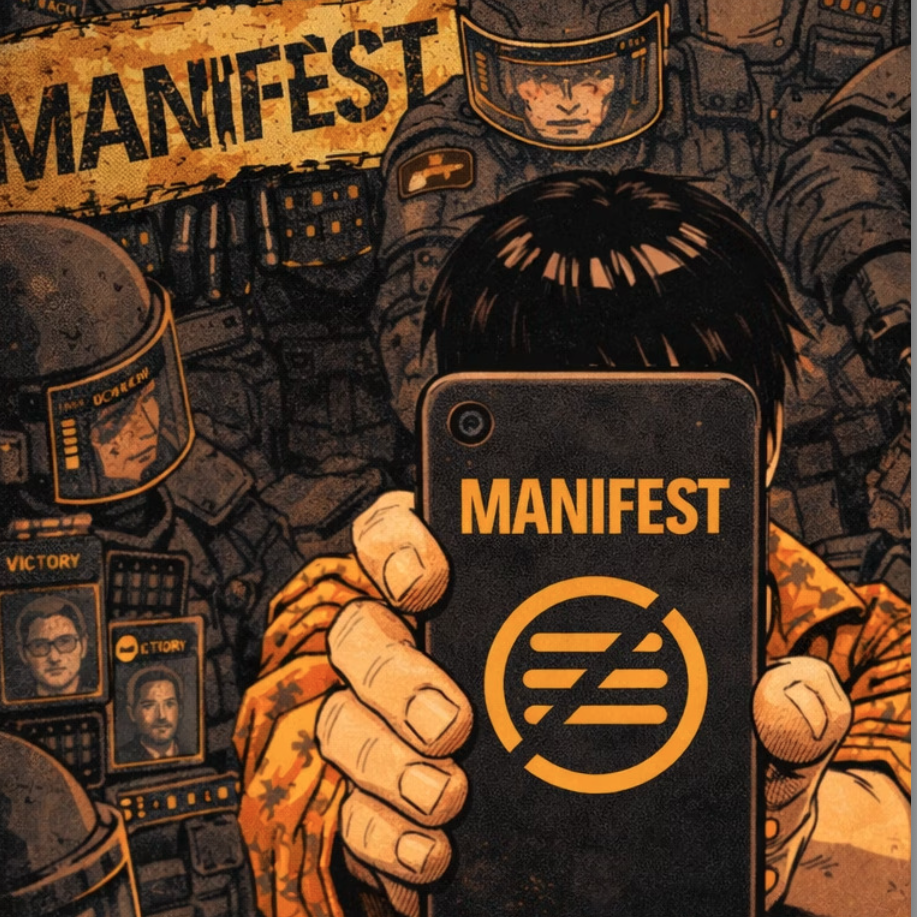
Manifest
Part of Technology Architecture
Manifest
Creator: Razali Samsudin
Architecture & Governance: Gareth Farry
Manifest is a civic and cultural infrastructure platform conceived and led by Razali Samsudin, currently in active working model testing.. It explores how witness, memory and creative expression can be structured within digital environments to support accountability and collective narrative.
It explores how witness, memory and creative expression can be structured within digital environments to support accountability and collective narrative — not as archiving, but as living, governed participation.
The platform develops tools that enable individuals and communities to document lived experience, remix cultural memory, and coordinate around shared concerns. Its ambition is structural: to create durable architectures through which testimony, authorship and participation can be recorded, recognised, and – critically – protected.
As architecture and governance advisor, I support the development of the platform’s structural logic. This includes modelling how authority, consent and stewardship operate within the system; designing coordination frameworks that preserve plurality; and ensuring that technological execution aligns with legitimate collective process.
Manifest sits at the intersection of culture and infrastructure. It treats digital space not as a broadcast medium, but as a field of accountable participation. The focus is coherence: aligning creative production with governance design so that memory, agency and coordination reinforce one another.
Who Manifest is built for
Manifest is designed for those whose testimony, memory and creative expression exists in contested or dangerous conditions:
Youth and activist communities coordinating under surveillance or repression, who need infrastructure that doesn't expose them to the platforms that hold their data.
Artivists – practitioners who work at the intersection of creative production and political witness — for whom expression and accountability are inseparable acts.
Groups under repression who need to document, coordinate and preserve collective memory in environments where centralised platforms are liabilities.
Transitional justice practitioners working with communities whose testimony must be preserved in legally and historically durable forms – not just stored, but attributed, consented to, and contestable.
Journalists and archivists operating in high-risk environments where the provenance and integrity of source material is not merely useful but necessary.
Human rights defenders who need infrastructure that treats their participation as a right to be protected, not a behaviour to be tracked.
What these communities share is a need for platforms that take the governance of testimony as seriously as its storage. Manifest is built for that gap.
Why this matters structurally
The challenge Manifest addresses is one that cultural and civic platforms consistently defer: how do you ensure that testimony and participation are not just recorded, but recognised — in a form that persists beyond the platform that hosts them, and that remains legible when contexts change?
Most digital memory tools solve the storage problem. Manifest is concerned with the authority problem: who has standing to attest, on whose behalf, under what conditions of consent, and with what ability to revoke or amend. These are governance questions as much as technical ones. Getting the architecture right at this layer determines whether the platform produces durable accountability or merely durable data.
Current status: In active development – platform architecture working prototypes under specification, with initial deployment planned for Q4 2026.
On the architecture
As architecture and governance advisor, my work on Manifest focuses on the structural logic beneath the platform: how authority, consent and stewardship are modelled; how coordination frameworks preserve plurality rather than collapsing it; and how technological execution stays accountable to legitimate collective process.
The core design question is the same one that runs through SILT and the Amnesty DAO work: how do people exercise genuine authority in digital environments – over their own testimony, their own memory, their own participation — in ways that persist and hold even when platforms, jurisdictions, or political contexts change? Manifest addresses that question in the cultural and civic register. Working models are currently in active testing.
For more info visit - https://manifeststudio.org/
In relation to SILT and the DAO work
Manifest, SILT, and the Amnesty Human Rights DAO address a shared underlying problem from different directions: how do individuals and communities exercise legitimate authority in digital environments — over their own testimony, their own governance, their own identity?
SILT specifies the identity and authority layer. The DAO models distributed coordination for a rights-based movement. Manifest builds the cultural infrastructure through which witness and memory become accountable. The three projects are not separate commissions. They are converging architectures.